MARINE AUTONOMY

OFFSHORE ENERGY · MARITIME SECURITY · AU

Capability multiplier for marine robotics

Rapid Physics is building the USB-C equivalent for unmanned marine systems. Our hardware uplifts autonomy and simplifies unmanned vessel operations in offshore energy and defence.

MARINE AUTONOMY

OFFSHORE ENERGY · MARITIME SECURITY · AU

Capability multiplier for marine robotics

Rapid Physics is building the USB-C equivalent for unmanned marine systems. Our hardware uplifts autonomy and simplifies unmanned vessel operations in offshore energy and defence.

// TARGET AVAILABILITY

98.4

%

Autonomous on-station goal

// OPERATIONAL ADVANTAGE

-70

%

vs crewed maritime patrol

Capability brief

Maritime security

// OVERVIEW

Capability brief

Maritime security

// OVERVIEW

  • Marine autonomy for defence

  • Immediate focus · Maritime security

  • Australia & United Kingdom

  • Sovereign capability first

  • Defence operators · Government partners

  • AUKUS-aligned pathway

  • Evidence-driven engineering

OUR VISION

Be the force multiplier for marine autonomy industry

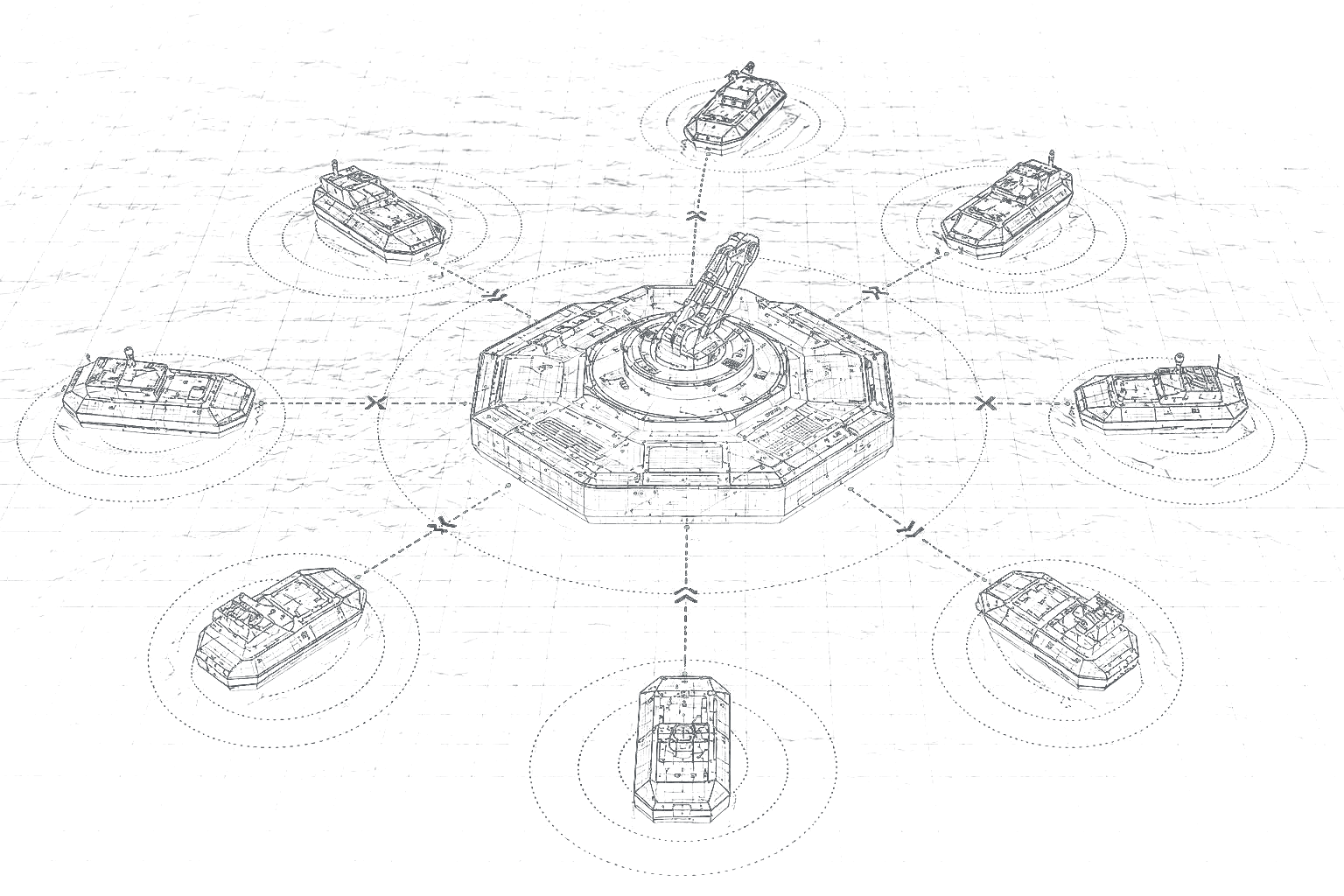
RAPID DOCKING TERMINAL / AU

IN DEVEELOPMENT

Rapid Docking Unit - RDU

USB-C equivalent system for marine systems

OUR FOCUS

001

Most companies build autonomous vessels. We build what keeps them at sea.

Rapid Physics develops the infrastructure layer that enables offshore energy and defence operators to deploy fleets of unmanned surface vessels and keep them on station, mission after mission, without human recovery.

// FEATURED CAPABILITY

Persistent Maritime Presence.

Our infrastructure keeps USV fleets operating continuously in the maritime zones that matter most — contested borders, energy fields, and critical offshore assets. Extending endurance while eliminating support vessel assistance.

Our infrastructure keeps USV fleets operating continuously in the maritime zones that matter most — contested borders, energy fields, and critical offshore assets. Extending endurance while eliminating support vessel assistance.

Infrastructure suite

002

Four systems. One presistent fleet. 

A modular architecture that layers into existing and emerging USV platforms. Delivering autonomous sustainment, command, and communications at fleet scale.

SYS / 01

● CORE

Mission Autonomy

Onboard decision-making and navigationfor mission execution in contestedmaritime zones.

SYS / 01

● CORE

Mission Autonomy

Onboard decision-making and navigationfor mission execution in contestedmaritime zones.

SYS / 02

● CORE

Fleet Command

Multi-vessel orchestration. Real-time awareness across maritime security operations.

SYS / 02

● CORE

Fleet Command

Multi-vessel orchestration. Real-time awareness across maritime security operations.

SYS / 03

● CORE

Persistent Comms

Resilient data link for operations in GPS-denied and EW-saturated environments.

SYS / 03

● CORE

Persistent Comms

Resilient data link for operations in GPS-denied and EW-saturated environments.

SYS / 04

● CORE

Maritime ISR

Sensor fusion and threat classification for patrol, surveillance, and EEZ protection missions.

SYS / 04

● CORE

Maritime ISR

Sensor fusion and threat classification for patrol, surveillance, and EEZ protection missions.

Operational process

003

How vessels stay on station.

A closed-loop autonomous cycle for defence operators — deploy, monitor, detect, report — built for persistent maritime security missions in Australian and UK waters.

STEP 01 — DEPLOY

Launch into mission zone.

USVs deploy autonomously from host platforms or coastalinstallations. No crew on deck. Configured for the maritimesecurity mission on launch.

<30

SEC

Mission configuration and launch

STEP 01 — DEPLOY

Launch into mission zone.

USVs deploy autonomously from host platforms or coastalinstallations. No crew on deck. Configured for the maritimesecurity mission on launch.

<30

SEC

Mission configuration and launch

STEP 02 — MONITOR

Maintain persistent presence.

Vessels carry out patrol, survey, and inspection missions while our autonomy layer tracks mission state, environmental conditions, and the surrounding maritime picture continuously.d patrol missions while our autonomy layer tracks mission state, environmental conditions, and maritime picture continuously.

24/7

CONTINUOUS

Real-time mission awareness

STEP 02 — MONITOR

Maintain persistent presence.

Vessels carry out patrol, survey, and inspection missions while our autonomy layer tracks mission state, environmental conditions, and the surrounding maritime picture continuously.d patrol missions while our autonomy layer tracks mission state, environmental conditions, and maritime picture continuously.

24/7

CONTINUOUS

Real-time mission awareness

STEP 03 — DETECT

Identify and classify.

Onboard sensor fusion detects vessels of interest and anomalies, classifies threats and asset issues, and flags activity patterns relevant to the mission — security threat or operational fault.

0

OPERATOR LOAD

Autonomous detection and classification

STEP 03 — DETECT

Identify and classify.

Onboard sensor fusion detects vessels of interest and anomalies, classifies threats and asset issues, and flags activity patterns relevant to the mission — security threat or operational fault.

0

OPERATOR LOAD

Autonomous detection and classification

STEP 04 — REPORT

Decision-ready intelligence.

Mission data, contacts, and alerts feedback to operators in a usable form — closing the loop between autonomous sensing and command response, whether that’s a defence ops centre or an energy company’s control room.

REAL

TIME

Operator-ready reporting

STEP 04 — REPORT

Decision-ready intelligence.

Mission data, contacts, and alerts feed back to defence operators in a usable form closing the loop between autonomous sensing and command response.

REAL

TIME

Operator-ready reporting

Fleet analytics

004

Real-time intelligence, across the entire fleet.

Every vessel, sustainment node, and operational window — continuously monitored across defence patrols and offshore energy missions. Evidence-driven execution at the core of everything we deploy.

Fleet Status

// Live — all operational zones

LIVE

Jervis Bay

AU — PATROL ZONE

On station

4 USV · 94% charge

Portsmouth

UK — EEZ SURVEY

On station

6 USV · 87% charge

Coral Sea

AU — ISR LOITER

Sustaining

2 USV · recharging

Fleet uptime

98%

Fleet uptime

98%

Sustainment cycle

87%

Sustainment cycle

87%

Comms integrity

94%

Comms integrity

94%

Mission adaptation

76%

Mission adaptation

76%

Endurance forecast

91%

Endurance forecast

91%

Fleet Health Index

// Composite score

87

/ 100

Active USVs

12

Sustainment nodes

4

Avg. endurance

34 days

Crew hours saved

2,180

Questions & answers

What investors & partners usually ask.

Who we are, what we’re focused on, and why now.

Who we are, what we’re focused on, and why now.

What exactly does Rapid Physics build?

Rapid Physics is a marine robotics company. We deliver autonomous capability for the operators who need unmanned vessels working continuously at sea — defence forces protecting maritime borders, and offshore energy operators sustaining critical assets. Our stack combines mission autonomy, fleet command, persistent comms, and maritime ISR into a single sovereign capability.

Who are your customers?

Two core groups. Defence forces and government agencies responsible for maritime security and offshore energy operators (oil, gas, offshore wind) sustaining critical infrastructure in those same waters. Prime contractors and integrators building or fielding unmanned maritime capability for either market fit alongside.

Why focus on these two markets?

Marine autonomy is a wide field. Defence and offshore energy share the same operational problem — they both need persistent unmanned presence in waters that are expensive, dangerous, or impossible to crew continuously. The technical solution is the same. Building once for two markets is how a focused early-stage company ships real capability without spreading thin.

Are you raising capital?

Yes — we're raising from defence-focused investors aligned with sovereign maritime capability in Australia and the UK. Get in touch for a briefing on stage, roadmap, and how the round is structured.

How does the same platform serve both markets?

The hard problems are identical: getting a USV to deploy autonomously, stay on station for weeks at a time, communicate through harsh conditions, and feed decision-grade data back to operators. Whether the mission is patrolling an EEZ or surveying a subsea pipeline, the autonomy stack underneath is the same. We build it once, configure it per mission.

// REQUEST A BRIEFING

Let's talk focus

Let's talk focus

We’re talking to strategic investors, defence operators, offshore energy operators, and government partners backing sovereign maritime capability.

Operational process

003

How vessels stay on station.

A closed-loop autonomous cycle for defence operators — deploy, monitor, detect, report — built for persistent maritime security missions in Australian and UK waters.

STEP 01 — DEPLOY

Launch into mission zone.

USVs deploy autonomously from host platforms or coastalinstallations. No crew on deck. Configured for the maritimesecurity mission on launch.

<30

SEC

Mission configuration and launch

STEP 03 — DETECT

Identify and classify.

Onboard sensor fusion detects vessels of interest, classifies threats, and flags activity patterns relevant to the maritime security mission.

0

OPERATOR LOAD

Autonomous detection and classification

STEP 02 — MONITOR

Maintain persistent presence.

Vessels carry out surveillance and patrol missions while our autonomy layer tracks mission state, environmental conditions, and maritime picture continuously.

24/7

CONTINUOUS

Real-time mission awareness

STEP 04 — REPORT

Decision-ready intelligence.

Mission data, contacts, and alerts feed back to defence operators in a usable form closing the loop between autonomous sensing and command response.

REAL

TIME

Operator-ready reporting